
Background
Product and Marketing teams approached me with an idea – to explore the potential of integrating micro-learning (short videos) into the edX b2b platform, allowing access to course content without enrollment.
Problem
The opportunity was inspired by examining the competition and had no defined problem or success metrics. We were starting with a solution and needed to understand how we can apply it to our product and user base.
Solution
I've applied design thinking frameworks and facilitated workshops to define the use case and success metrics.
Impact: Based on presented findings on the effort and risks, the initiative was paused due to resourcing and prioritization constraints. However, the strategic foundation and early design work were later picked up by another designer at edX after my departure.
Understanding use cases
I started with a desk research on micro-learning to understand how it's typically used and its impact on a learning journey.
Concept map
I created a Concept map that helped outline the areas of the platform that might be impacted by change, potential applications for the new feature, and areas of friction.
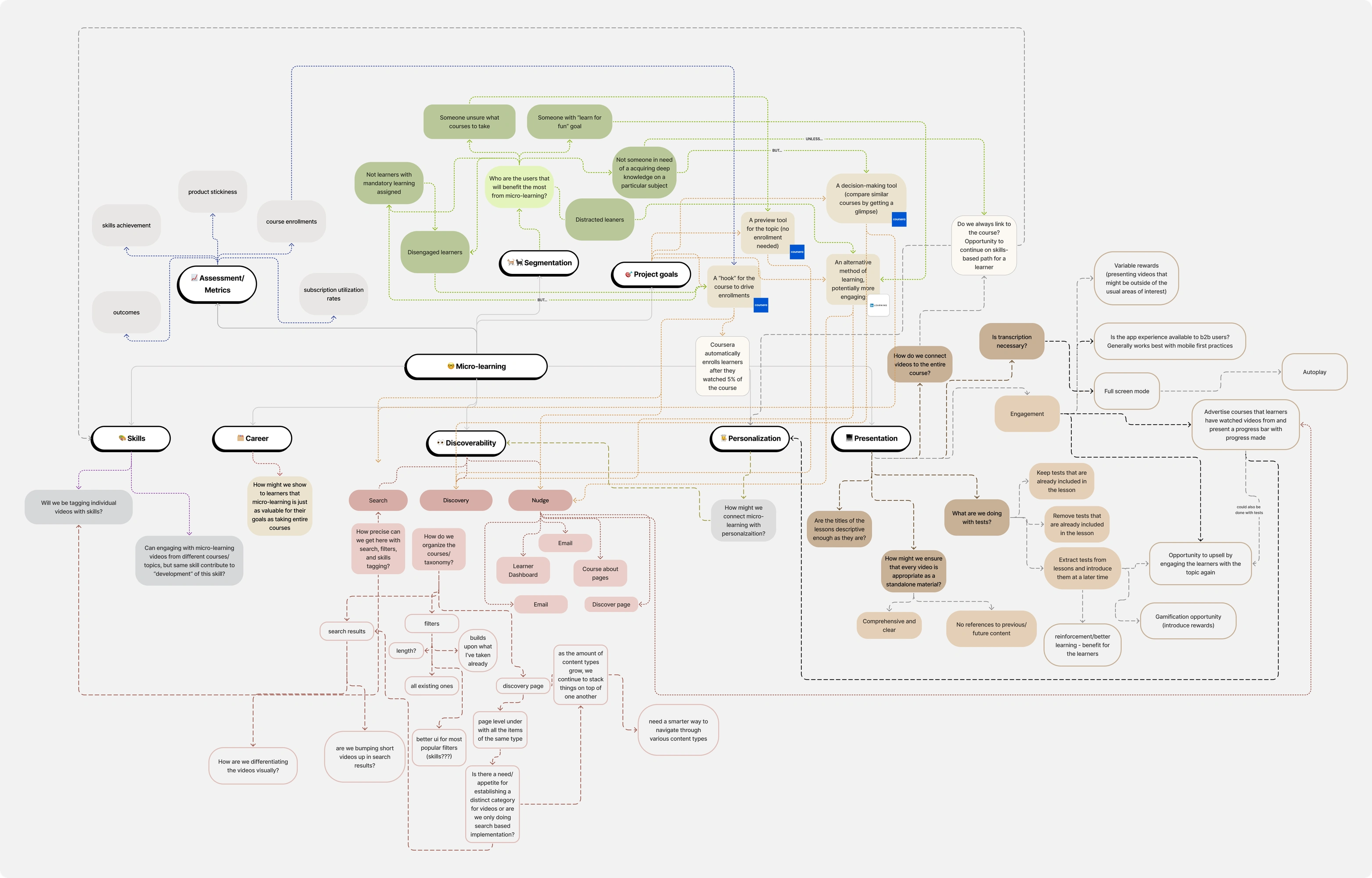
Concept map
Solution tree
Solution-Opportunity tree helped link micro-learning ideas to clear user and business goals, desired outcomes, and the work required to achieve them. This approach helped facilitate stakeholder discussions and align the team on the most promising use case to pursue.
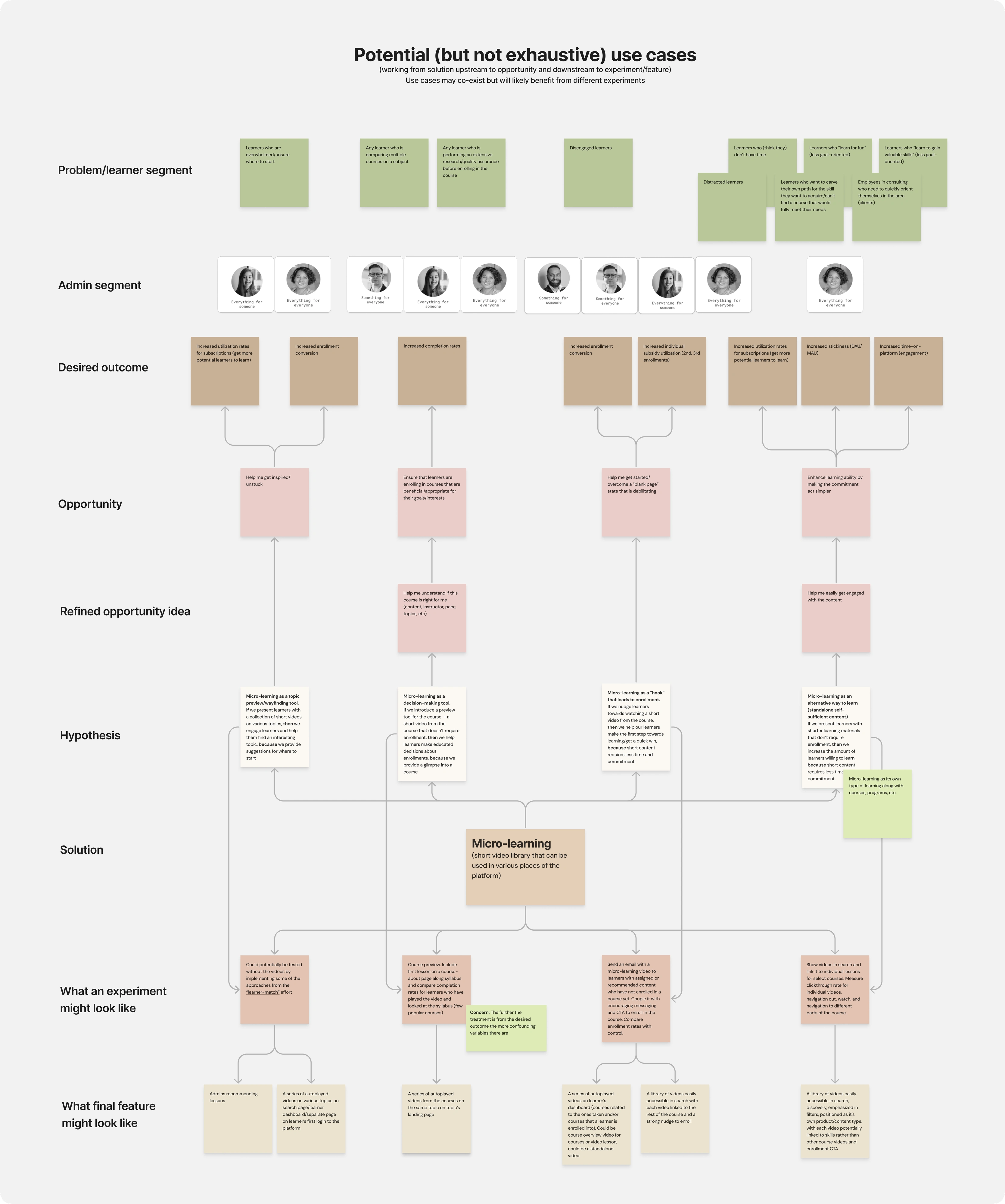
Solution-driven Opportunity-solution matrix
Journey map
With aligned goals, I developed a learner journey map that applied behavioral principles to guide motivation and action. I then facilitated brainstorming and prioritization sessions. This helped narrow in on key opportunities:
- Familiarize learners with the new type of content and guide users towards it
- Accommodate the increased content volume and prioritize results for better user experience
- Encourage users to enroll
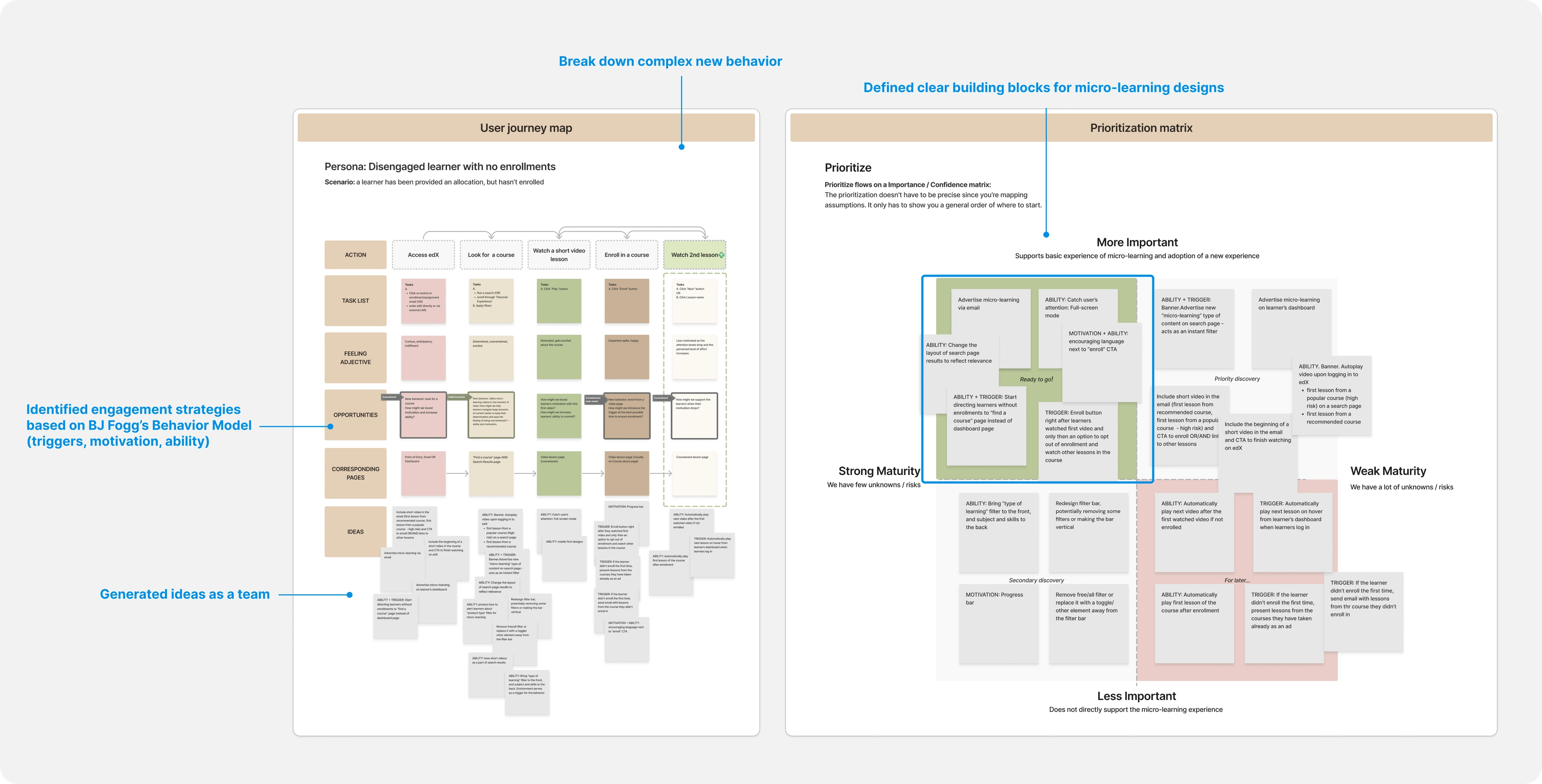
Design thinking frameworks and workshop results
Concepts
I translated the strategy into low-fidelity wireframes that were used to socialize the idea with company leadership.
- Awareness: multiple ways to advertise the new feature: email, typeahead, filters.
- Redesigned search results: vertical instead of grid stacking to imply prioritization and accommodate for increased content volume.
- Integrated "Enroll" button: enable enrollment flow directly from video content.
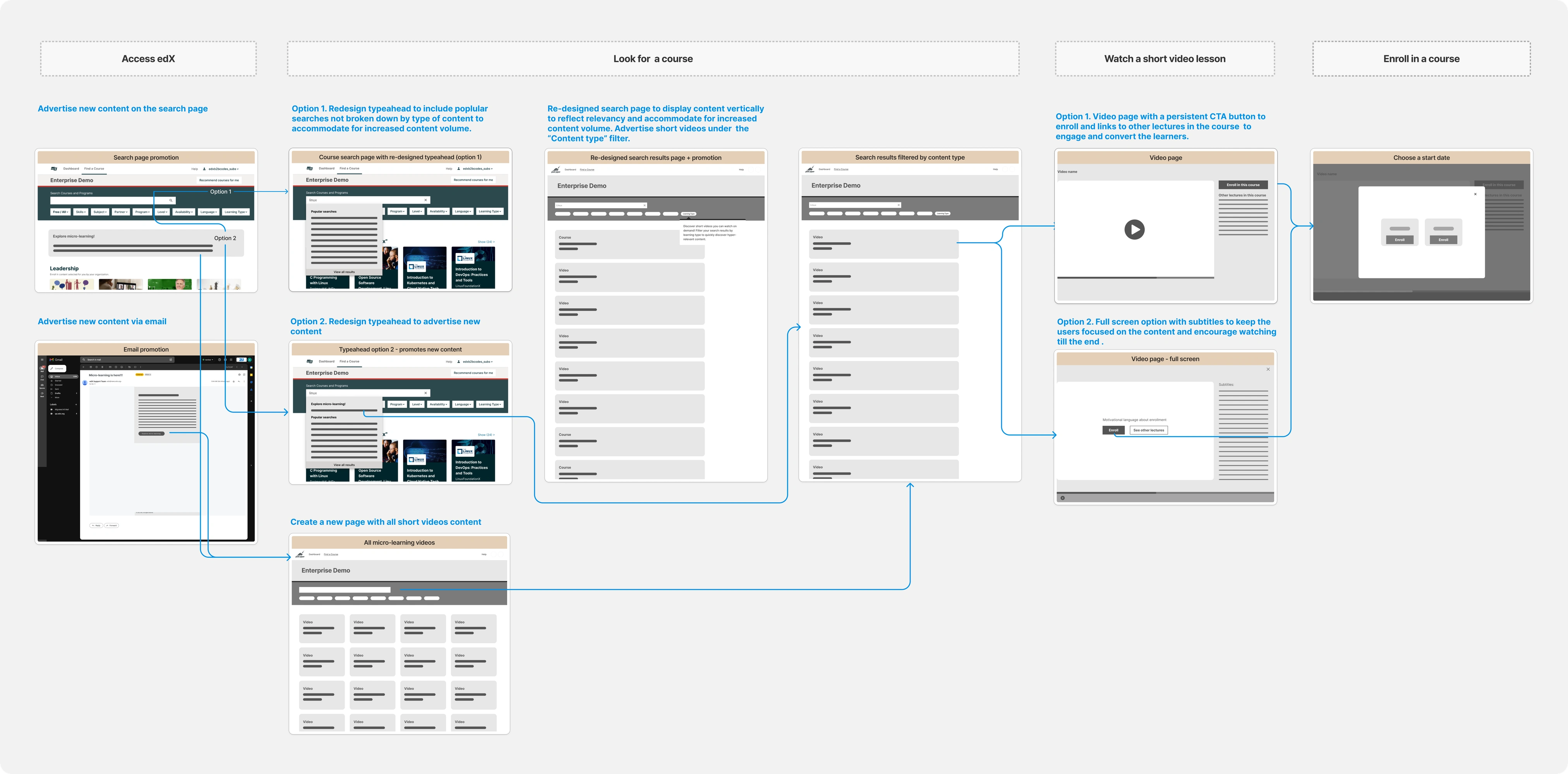
Low-fidelity explorations
Learnings
Working on this project helped me develop an expertise in managing ambiguous projects by applying structured collaboration, and to use frameworks for communication and decision-making.