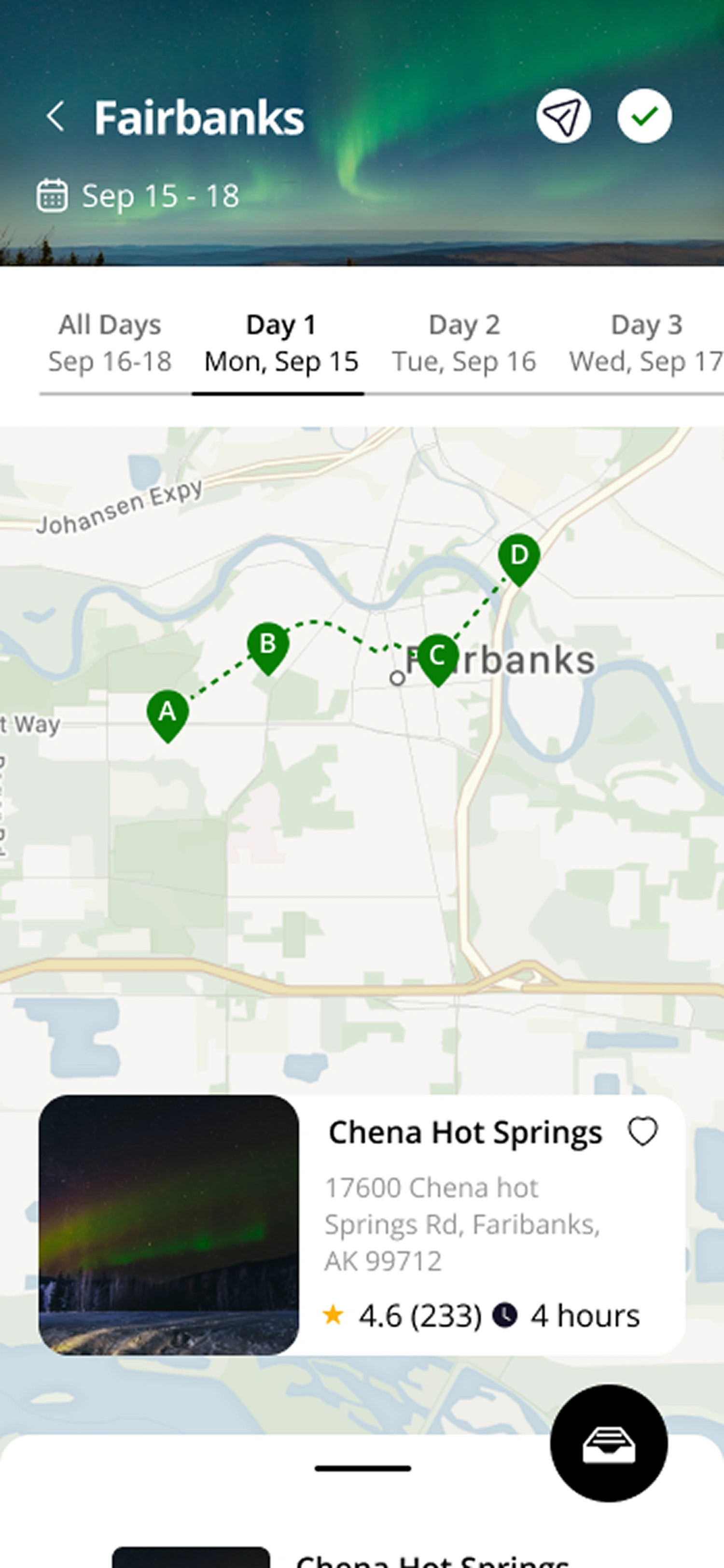
Challenge
Problem
Travelers were frustrated with fragmented planning and the lack of a central hub for inspiration and sample itineraries.
Solution
We built an MVP of the app that tackled the complexities of modern trip planning while building community among travelers.
Timeline
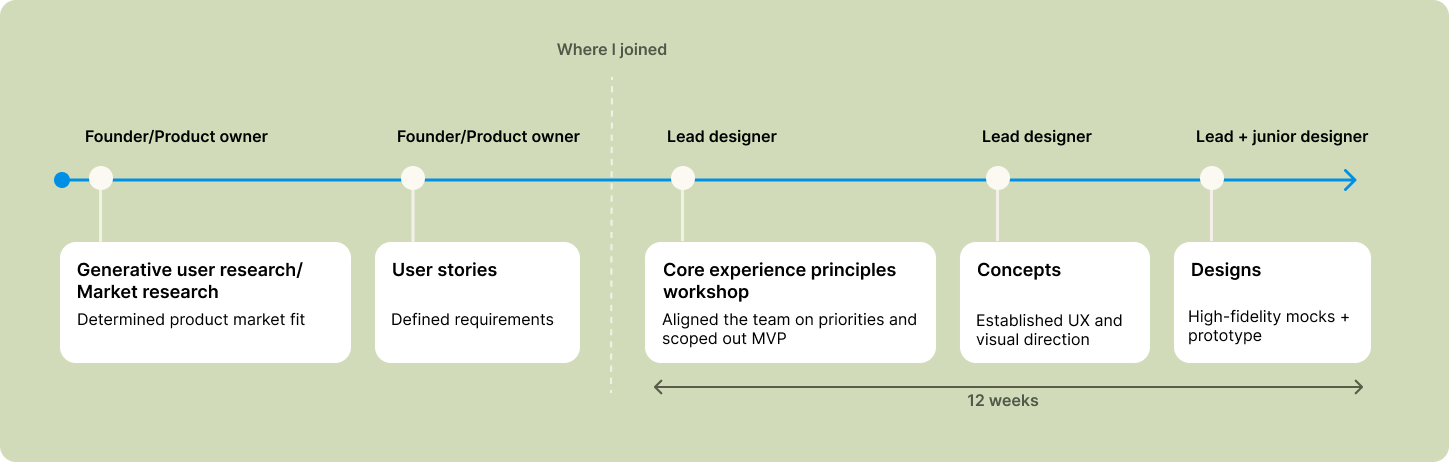
Project timeline: from founder-led research to a lead and junior designer team
Scope definition
I turned early user insights from generative user research performed by the founder into actionable design principles. These principles guided a streamlined MVP focused on inspiration, flexible itineraries, and social features.
Experience principles
I took a step back from user stories to establish a holistic approach to design. I ran a workshop to establish the app's Core Experience Principles based on user feedback.
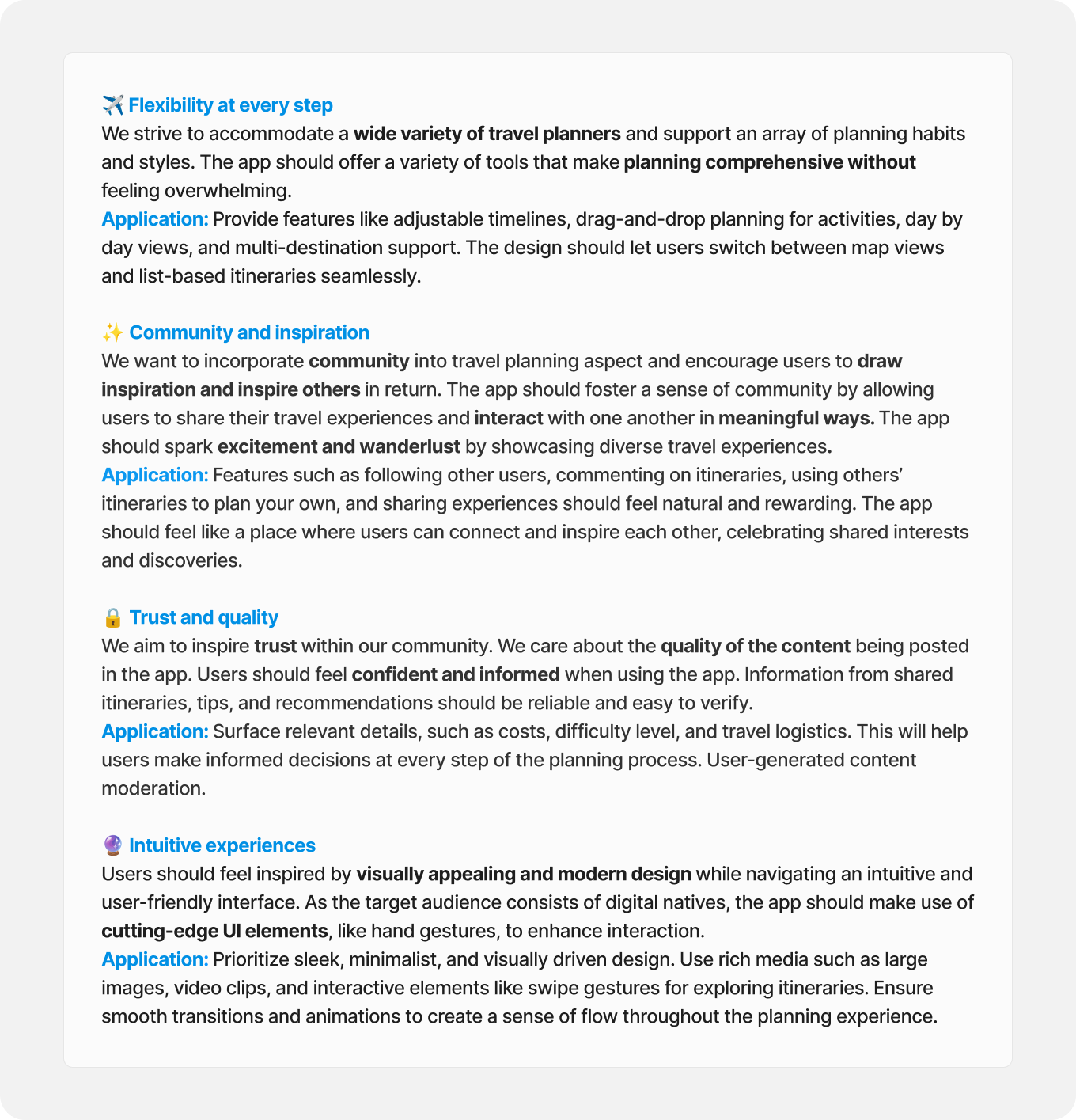
Core experience principles
Prioritization
I ran a MoSCoW prioritization workshop to balance feature requests with MVP scope and bring back focus to the core value of the app.
This resulted in omitting all social media-related features due to the high implementation costs.
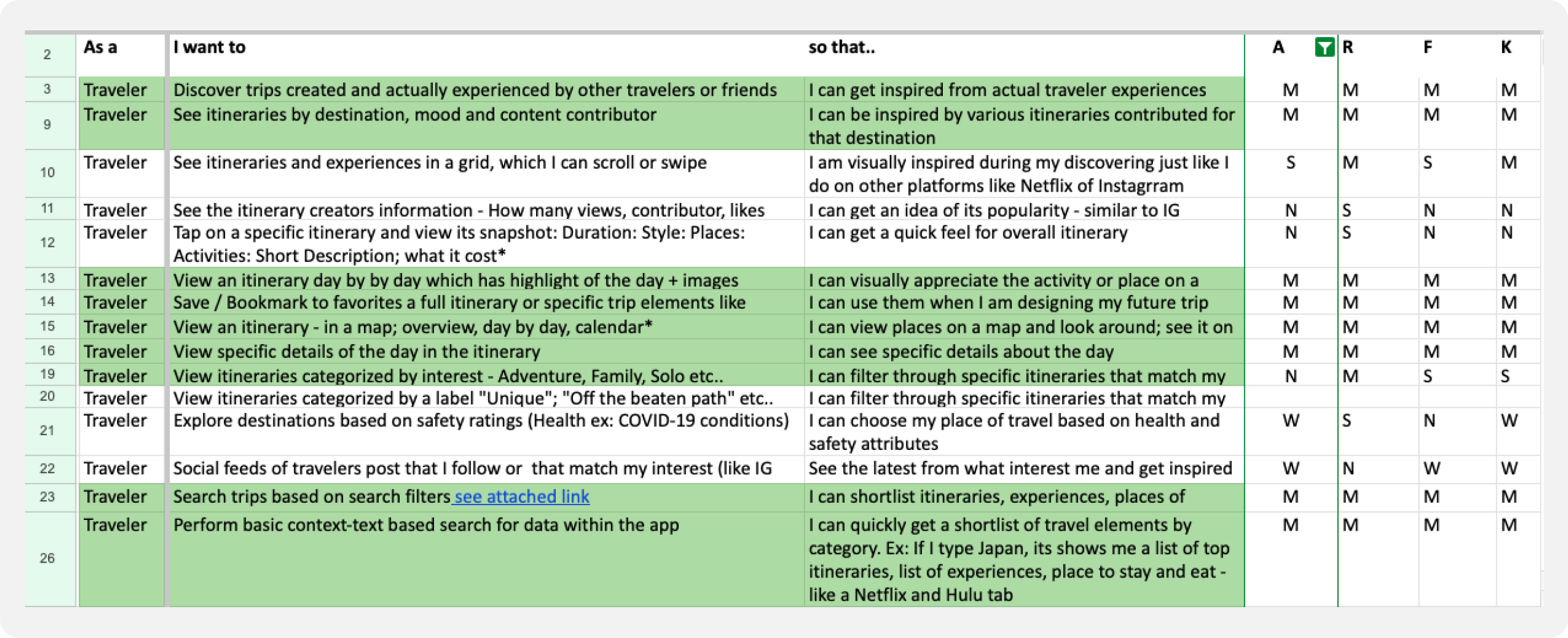
Snippet of MoSCoW prioritization matrix
Brainstorming
Crazy 8s ideation explored:
- Visual hierarchy: how to effectively present experience options (list vs. map), itinerary progress, and filters.
- Interaction flow: how to seamlessly transition between browsing experiences, adding them to the itinerary, and modifying the itinerary plan.
- Information density: how to display a large amount of information (experiences, dates, locations) in a clear and concise manner.
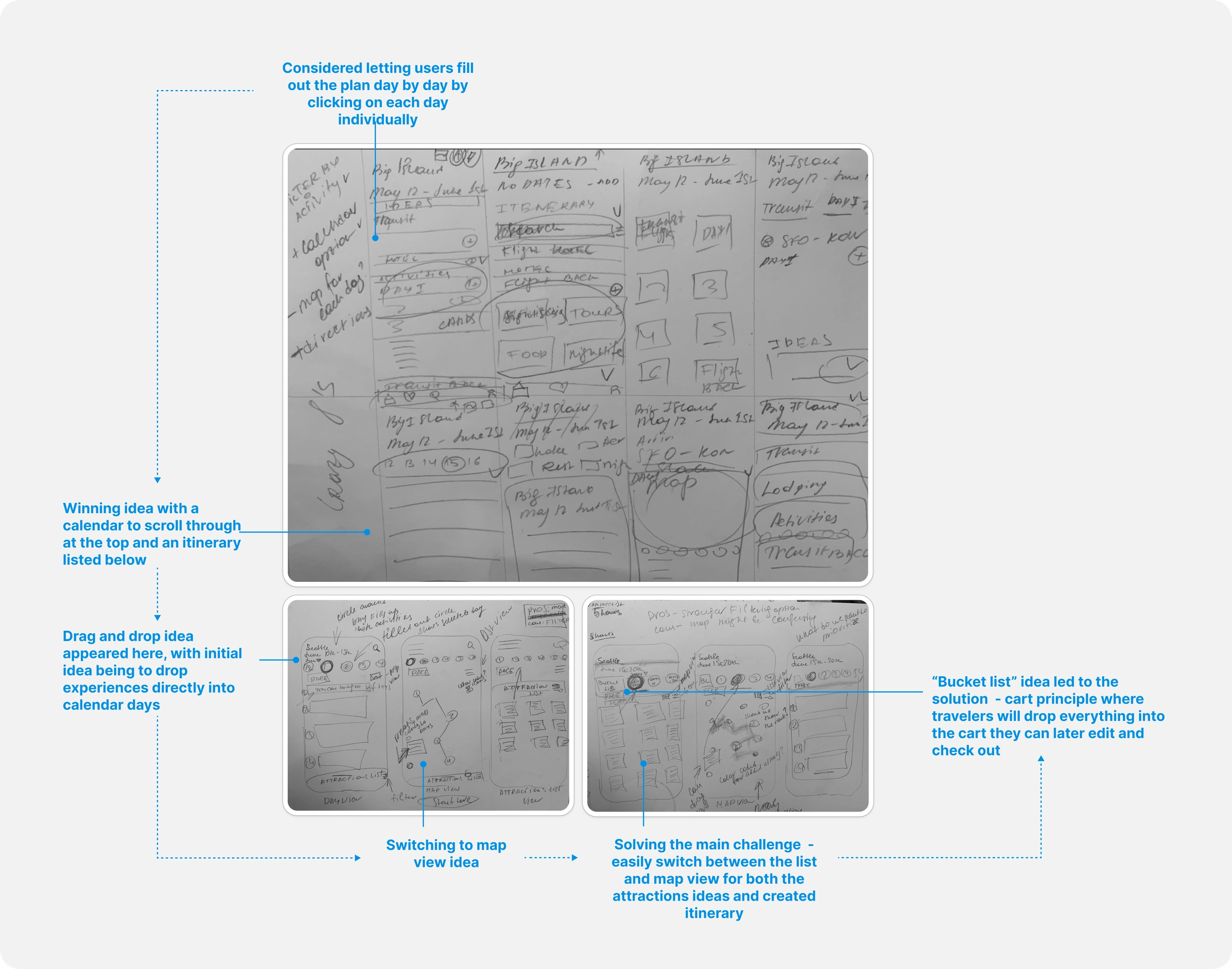
Sketches for Crazy 8s
Dynamic planning experience
User flows
User flows established a lean MVP experience, seamless transitions, and inspiration loops.
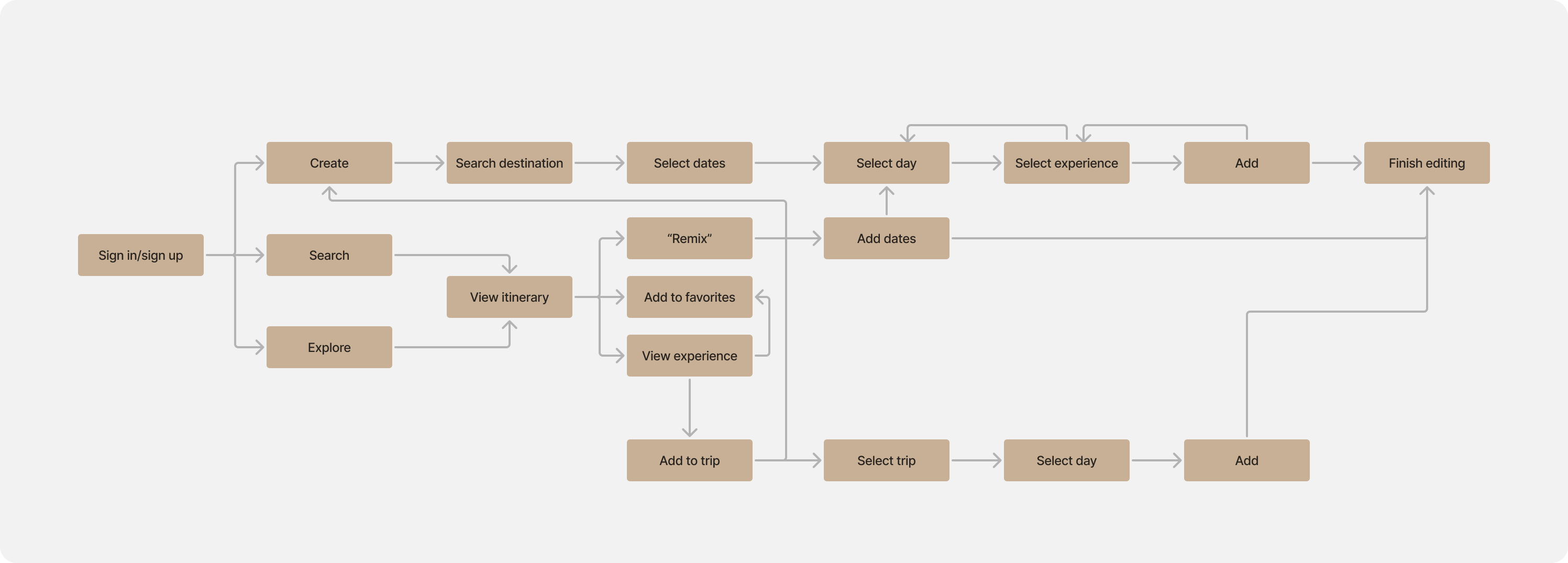
User flows
Mocks
The final mocks reflect our core experience principles:
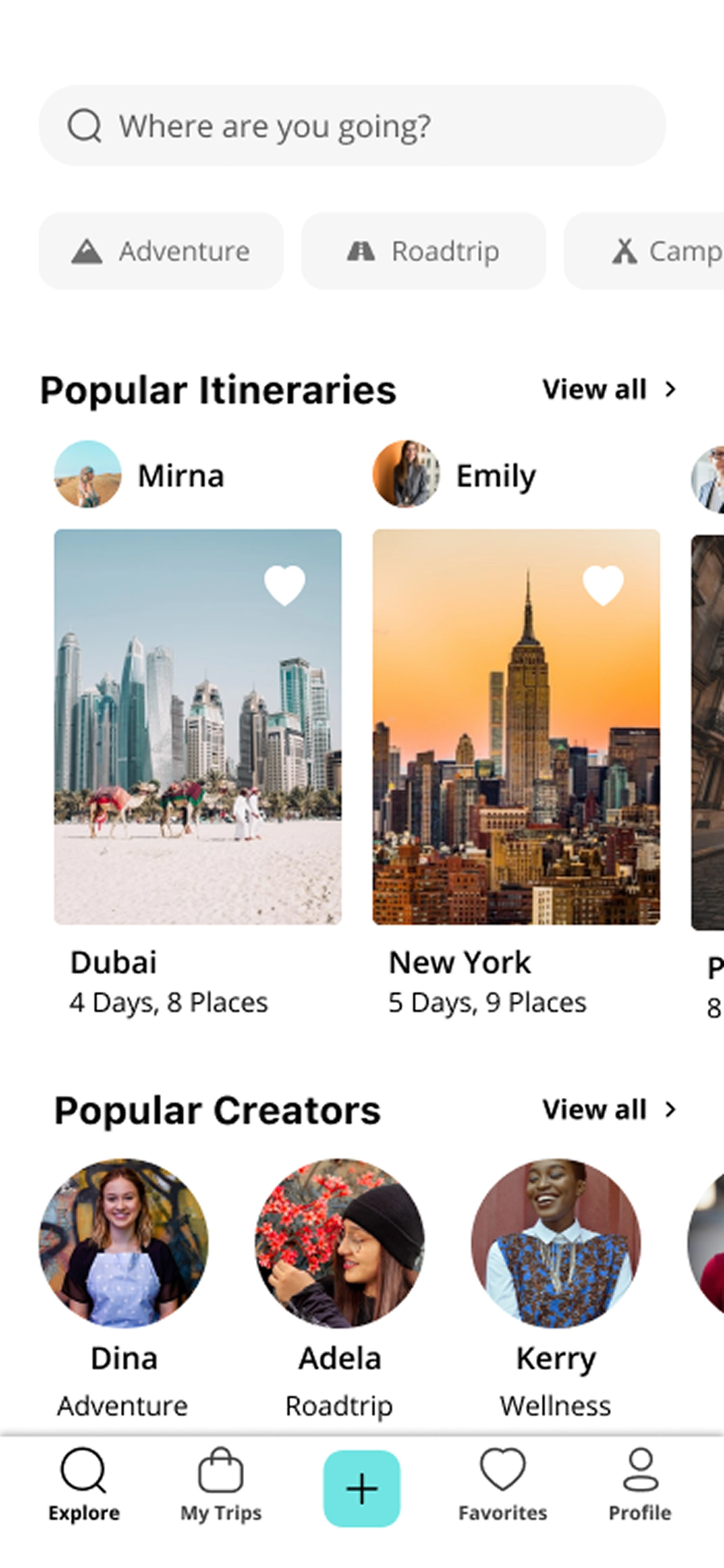
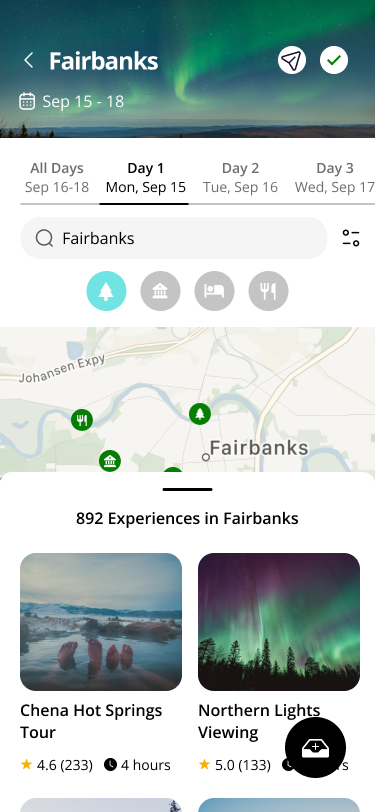
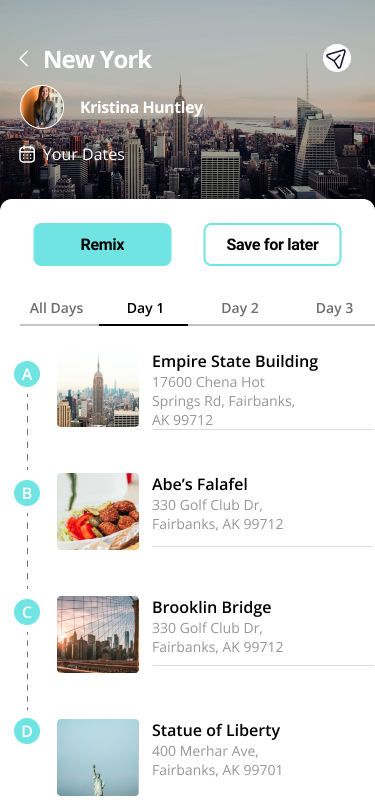
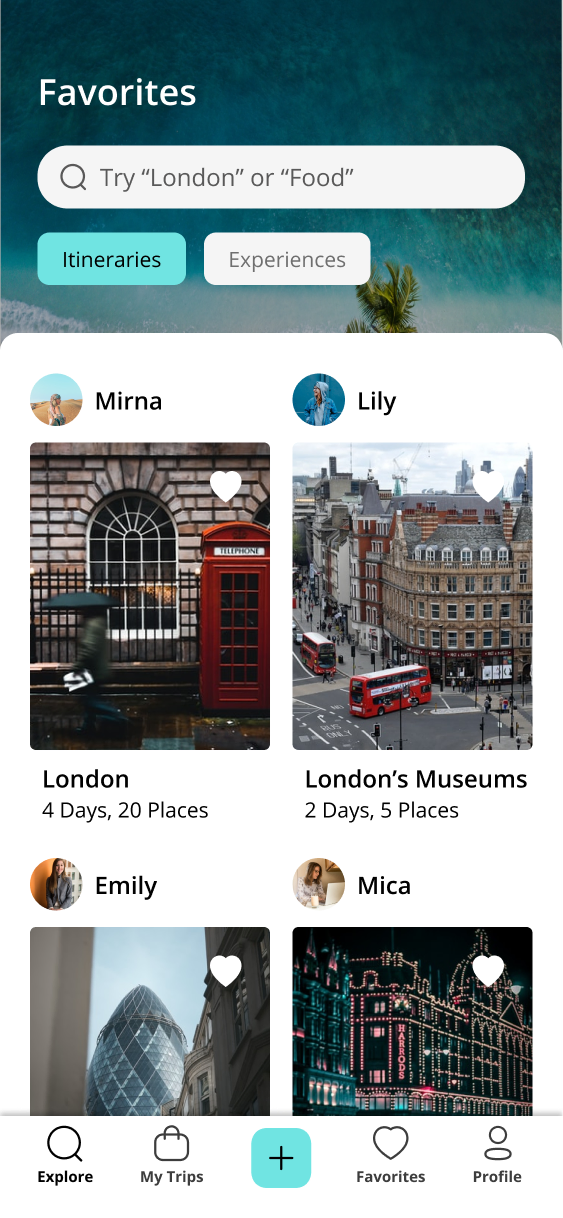
- Information organization: a four-panel layout lets users view both discovery and saved experiences in list and map views, supporting our Flexibility at Every Step principle.
- Grid layouts: lean, scalable grids enhance clarity and navigation, aligning with Intuitive Experiences.
- Focus on details: star ratings and rich descriptions build Trust and Quality through social proof.
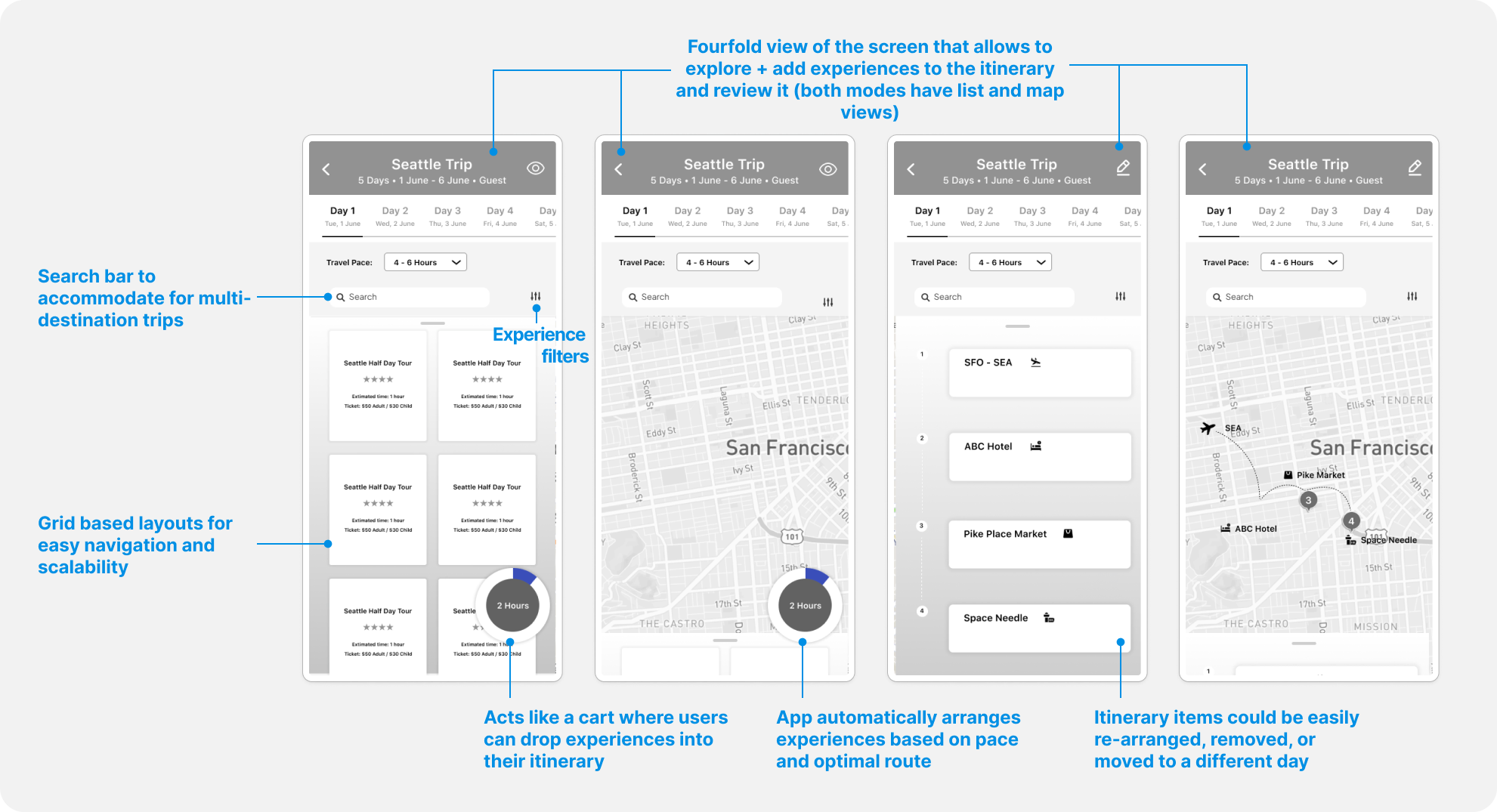
Low fidelity designs
Feedback
User testing revealed key opportunities to improve flexibility and usability, leading to the following refinement requirements:
- Simplify itinerary management: enable users to add or remove days without adjusting dates, streamlining trip creation and editing.
- Smart prompts: introduce dynamic prompts, such as rescheduling activities if venues were closed to make planning more intuitive.
- Streamline flows: remove unnecessary steps in trip creation and other key processes for a more guided experience.
- Improve post-creation navigation: redirect users to My Trips after creating an itinerary, replacing confirmation notifications for better continuity.
Peer-inspired travel planning
Learnings
Guiding principles
Crucial for focused decisions, consistent design, streamlined trade-offs, and a scalability foundation.
Early scalability
Modular features & scalable elements ensure MVP evolution without major redesigns.